THE JOURNEY OF A TRUFFLE
Every truffle has a story that begins in the forests of Italy. From the moment it is discovered to the moment it reaches your kitchen, quality, freshness and timing matter.
A Partnership Built on Instinct
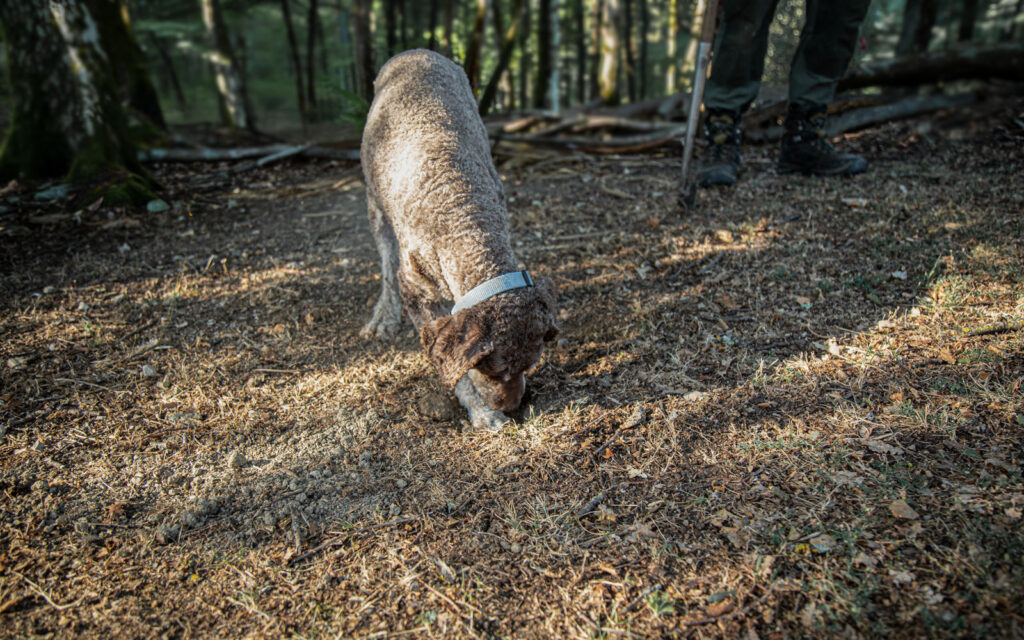
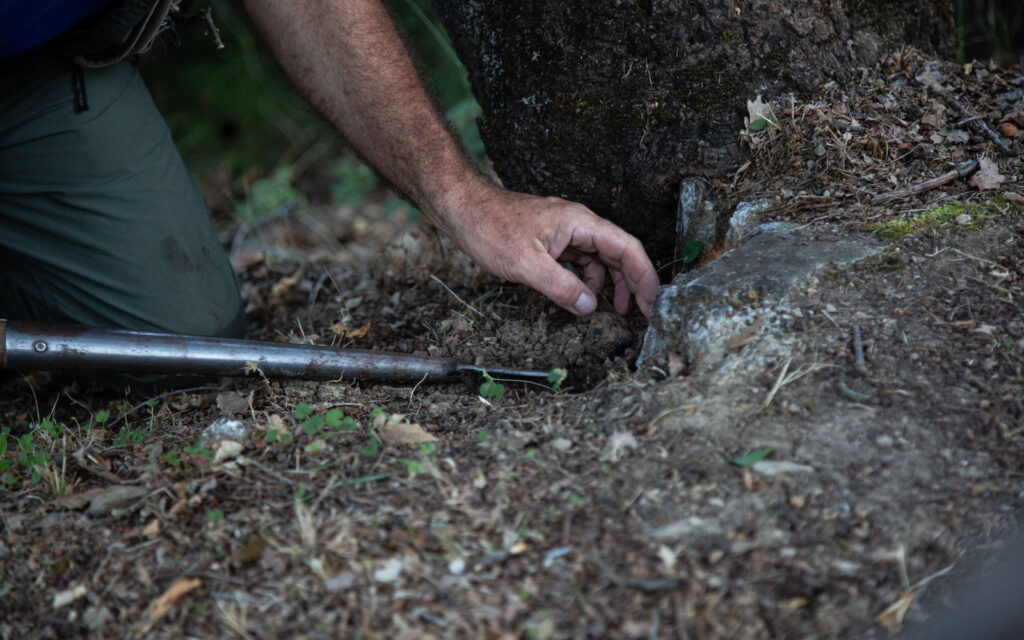
With a keen nose and years of experience, the truffle dog and hunter work together to uncover what lies beneath the soil. It is a partnership built on trust, patience and a shared understanding of the land.
Carefully Selected at the Source
Once discovered, each truffle is carefully harvested and selected for its quality, aroma and character. Sourced directly from Italy, the truffles reflect the unique soil, climate and seasons in which they grow.
From Italy to Your Kitchen
From the forests of Umbria to customers across Europe, every truffle begins its journey from the source. Carefully handled and transported, our aim is to deliver the exceptional quality and freshness of Italian truffles to your door.
1–3 Days – From harvest to your kitchen

Made to be enjoyed
The final part of the journey is yours. Whether shaved over a simple pasta, paired with eggs or used to create an unforgettable dish, truffles are best enjoyed simply — allowing their natural aroma and flavour to take centre stage.
About Truffles
What is a truffle?
A truffle is a rare, edible fungus that grows underground, rather than above the surface like most mushrooms. It belongs to the Tuber genus and grows in close association with the roots of certain trees and plants.
Through a natural symbiotic relationship known as mycorrhiza, the truffle and its host tree exchange nutrients and water. This unique relationship, together with the soil, climate and surrounding environment, contributes to the distinctive aroma and character of each truffle.
How do truffles grow?
Truffles grow underground, usually close to the roots of specific trees and shrubs. Their development begins when microscopic spores establish a relationship with the roots of a suitable host plant.
As the truffle develops, it remains beneath the soil, gradually maturing and developing the complex aromas and flavours for which it is prized.
Where do truffles grow?
Truffles grow in specific soils and climates, often in woodland areas around the roots of trees such as oak, hazel, beech, hornbeam, poplar, ash and pine.
Italy is particularly rich in truffle-growing regions, with Umbria, Piedmont, Tuscany, Marche and Abruzzo among the areas known for their truffle traditions and production.
How long does it take for a truffle to grow?
The time required for a truffle to mature varies depending on the species and environmental conditions. Once established in association with the roots of a host tree, the truffle develops underground over several months before reaching maturity.
The exact growing cycle is influenced by factors such as soil, rainfall, temperature and the health of the host plant.
Truffle Hunting
How are truffles found?
Because truffles grow underground, they cannot be seen when they are ready to harvest. Traditionally, trained dogs are used to locate them by their distinctive aroma.
The truffle hunter follows the dog’s instinct and experience to identify the precise location of the truffle beneath the soil. The partnership between hunter and dog is an important part of the centuries-old tradition of truffle hunting.
Which dogs are used to hunt truffles?
The Lagotto Romagnolo, a breed originating in Italy, is widely regarded as the traditional truffle-hunting dog. Its excellent sense of smell, intelligence and ability to work closely with its handler make it particularly well suited to the task.
Other breeds can also be trained for truffle hunting, but the Lagotto remains closely associated with the tradition in Italy.
Fresh Truffles
When are truffles in season?
Each truffle variety has its own growing and harvesting season. Summer truffles are available during the warmer months, while autumn and winter bring varieties with increasingly intense and complex aromas.
The prized white truffle is typically harvested in autumn and early winter, while the black winter truffle is generally available from late autumn through winter.
As truffles are a natural seasonal product, availability can vary from year to year depending on weather and growing conditions.
Can truffles be cultivated?
Yes. Some truffle varieties, particularly the black winter truffle (Tuber melanosporum), are cultivated by planting suitable host trees and creating the right conditions for the truffle to establish a symbiotic relationship with their roots.
However, cultivation requires patience and careful management, and it can take several years before a truffle orchard begins producing.
Why are truffles so expensive?
Truffles are considered a luxury ingredient because they are seasonal, naturally scarce and difficult to find. They grow underground in specific conditions and cannot simply be harvested like conventional crops.
Their discovery traditionally relies on trained dogs and experienced truffle hunters, while weather and environmental conditions can significantly affect each year’s harvest. The combination of rarity, seasonality, labour and demand contributes to their value.
What does a fresh truffle taste like?
Every truffle variety has its own distinctive aroma and flavour. Depending on the species, you may experience earthy, nutty, mushroom-like, garlicky, spicy or subtly sweet notes.
What is the best truffle?
There is no single “best” truffle — it depends on personal taste and how you plan to use it. The white truffle (Tuber magnatum Pico) is highly prized for its powerful aroma, while the black winter truffle (Tuber melanosporum) is celebrated for its complex and elegant flavour.
Summer and autumn varieties offer a milder, more approachable character and can be incredibly versatile in the kitchen.
Fresh truffles are prized as much for their aroma as for their taste. Their fragrance is often released and intensified when the truffle is freshly shaved over warm food.
Buying & Enjoying
How should fresh truffles be stored?
Fresh truffles are best kept refrigerated and consumed as soon as possible after receiving them. Store them in an airtight container, ideally wrapped in clean, dry paper that is changed regularly to help control moisture.
Fresh truffles are highly perishable, so they should be handled carefully and kept dry. For the best experience, enjoy them as soon as possible after delivery.
How long do fresh truffles last?
The shelf life of a fresh truffle depends on the variety and its condition when harvested. In general, fresh truffles are best enjoyed within a few days of receiving them.
Because their aroma and freshness naturally decline over time, we recommend using them as soon as possible for the best flavour and fragrance.
How should I prepare and eat truffles?
Truffles are best enjoyed simply. Their delicate aroma can easily be overwhelmed by strong ingredients, so they are often paired with foods such as fresh pasta, risotto, eggs, potatoes, butter and mild cheeses.
A truffle shaver allows you to slice the truffle very thinly over warm dishes, helping to release its aroma. For many varieties, gentle heat is enough to bring out their full character.
Can I cook fresh truffles?
Yes, but the method depends on the variety. Some truffles benefit from gentle warming, while others are best shaved raw or added at the very end of cooking.
As a general rule, avoid excessive heat, which can diminish the delicate aromas that make fresh truffles so special.
What’s the difference between fresh truffles and truffle products?
Fresh truffles are the whole, natural fungus harvested during its seasonal growing period. Truffle products, such as sauces, creams, oils and preserved truffles, are made using truffles and other ingredients to create products that can be enjoyed throughout the year.
While they offer a different experience from fresh truffles, quality truffle products can be a convenient way to add truffle flavour to everyday cooking.